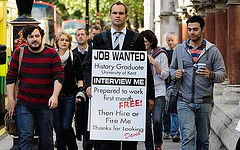
In the world of social networking, job hunters can have a difficult time maintaining a professional online presence that still effectively markets their personal brands. Today, having a traditional resume with a nice layout, extensive job experience, and a master’s degree might not be enough to get your name to potential employers. For networking and other job-hunting activities, LinkedIn can be a career professional’s best resource. (more…)
Archive for the ‘Resumes’ Category
How Linkedin is Becoming the 21st Century’s Resume
Friday, November 18th, 2011Resume Tips For Medical Field Professionals
Monday, June 13th, 2011Thanks to Ceete Sheekels Phd from AboutMedicalBillingAndCoding.Org for these researched white papers.
Health care fields are in high demand and this can make landing the job more competitive. So submitting a resume that is well organized can help you to stand out from the rest. When first creating your resume or revamping your original resume place the following at the forefront:
• Specialties
• Educational background
• Certification
• Licenses
It has been studied that when an employer receives a resume they will typically spend a minute or less looking at the resume. So if they are able to see the items that are important (the ones mentioned above) at first glance, this could make or break your chances of actually landing the position.
1. You may be wondering what the difference is between a health care resume and other resumes. In the health care field some of the differences include:
⎫ Life and death issues
⎫ Handling sensitive patient information
⎫ Decisions based on ethic or morals
This is why when creating or re-working your resume place your medical education at the beginning. This information should include the name and address of the college, university or vocational school you attended and then the degree and your graduation date.
2. Jobs within the health care field will make it a requirement that you are either certified, licensed or another form of accreditation. In the medical coding field, employers typically require that you have certification from the AAPC (American Association of Professional Coders). When adding your license or certification information, be sure to include if it is still current or the month and year that it expired (if you want to land the job make sure it is not expired). If you have titles that are abbreviated then spell out the abbreviation if it is one that may be unknown. Your title should be placed next to your name. So if your resume reads “Mary Matthews, CCS-P”, list it in your resume and spell it out Certified Coding Specialist Physician Based. This is especially important if you are applying to work at a larger hospital and your resume is sent to the HR department they may not have an understanding as to what this may mean.
3. Generally the header of your resume is your name; think outside the box when creating your resume by personalizing it to match the job you are applying for. For example, if you are applying to become a medical billing specialist and your previous title was “Insurance Billing Specialist” then feel free to use this. This method works because then the employer skimming through the resume will see the resume that matches the job posting.
4. Lastly, it is important to add your accomplishments and volunteer work you may have participated in. However, the volunteer work or the accomplishments you achieved should be relevant to the job that you are applying for. Also use this section to list all of the health care related organizations that you are currently a member of and any seminars that you have attended. This will show your potential employer that you are dedicated and passionate about the field.
| Be sure to look for us on your favorite networks: |
|---|
![]() |
![]() |
|---|
| Visit Our Bookstore for Great Values! |
|---|
![]() 101 Tips Every Job Seeker Should Know |
![]() The Ultimate Online Job Seekers eBook |
![]() 10 Biggest Interview Mistakes |
![]() 10 Biggest Resume Mistakes |
|---|
| Check out these hot articles! |
|---|
What It Takes to Get An MBA
Friday, May 27th, 2011What is an MBA?
The MBA, or Master of Business Administration, is a graduate management degree. Other management degrees include Master of Science in Business Administration (MSBA), Master of Public Administration (MPA), Master of Science in Administration (MSIA), Master of Public and Private Management (MPPM), and Master of Management (MM). (more…)
How to give a Job Winning Interview.
Tuesday, April 5th, 2011The Ultimate Guide to Writing Good Cover Letters
Tuesday, February 22nd, 2011No matter what the economic situation may be, getting a job is no easy task. This makes it even more important to put together a nice package for employers to consider each and every time you hit the mail. With that being said, many people do not understand what makes good cover letters. There are plenty of things that should go into a solid cover letter, and these things can often be the difference in you getting interviews and you getting left out of the party. So what are some of the best tips to consider when writing your cover letter? The following are vitally important.
Take cover letters seriously
Too many job seekers feel that their CV is all that matters. Research shows that employers care about both the appearance and the quality of the letter, though. These individuals have to look through hundreds of CVs in a given month and they get tons of inquiries about open and closed positions. Standing out is a challenge, and doing something unprofessional is almost always going to hurt you in the long run. A smart job-seeker understands that a cover letter is a professional thing, and it speaks well about your dedication to the position. Spend as much time on it as you do sculpting your CV.
Personalization is key
In an age where it’s hard to get jobs, more people are using the shotgun approach to job seeking. They send out hundreds of resumes to random employers in their area. Though this is a good way to get some responses, it does have some downsides. One of those is that it can be very hard to personalize your cover letter properly. Ask any human resources professional and they are likely to tell you the same thing. That is that they look for personalization. They like to know that you can do a bit of research about their company prior to spending in your CV.
The key thing to remember here is that they will be getting many CVs from many different job seekers. By taking a little bit of time and figuring out what the company is all about, you can distinguish your inquiry from the many others they get. Likewise, this will help you develop a better letter, since you will more easily understand how your skills interact with the company’s needs.
Don’t repeat your CV, supplement it
It should go without saying that the person reviewing your cover letter will have your CV in hand. They will see your accomplishments on the CV, so why would you provide them with a recitation? Not only is this a waste of time, but it wastes your best opportunity to paint yourself in a good light. Cover letters should instead act as a supplemental force. They should seek to expand upon your strengths and tell your story in a way that is easy to understand. Likewise, a cover letter gives you a chance to bring yourself in line with the company you’re applying to.
Use it to show that you get what they need, and use it show that your past experiences fit well with their current hiring goals. This is a prime opportunity to help the hiring professional on the other end see you as a possible asset to the company. One means of doing this is to describe how your past experiences have prepared you for the challenges of the position. Likewise, you might use this opportunity to bring together your jobs and past education.
Good writing is key
Not all positions require good writing ability, but almost all of them require an individual to have communication skills. You should view your cover letter as a chance to show off your concise, clear writing skills. Many people take this to mean that they should pull out the thesaurus and try to impress with big words. This would be a mistake almost every time. Good writing is clear and it gets to the point. It does not waste time nor does it waste words. Get to the point and show them that you are a strong communication that is capable of sharing their company’s message with the masses.
Cover letter checklist
What things should go into a good cover letter? There are plenty of ideas out there, and some people are more apt to get creative than others. The following things must be included in any good cover letter, though:
- Name and address of the hiring professional in the top left portion of the page
- Proper salutation (i.e. Dear John)
- One page maximum
- Bold, prominent signature
- Section speaking to your qualifications as they relate to the job specifics
- Name of networking contact if the person is relevant and known to the reader
- Examples of how you have achieved in the past
- Indication of when and how you will make contact with the employer
Overall, there are many ways to go with a cover letter. Good ones communicate your strengths, show off your writing ability, and help the hiring partner picture you as a part of their company. You should spend a significant amount of time on this, as it can only help you stand out from the crowd.
This was a guest post by John McElborough who writes about finding jobs and succeeding in the workplace.
| Be sure to look for us on your favorite networks: |
|---|
![]() |
![]() |
|---|
| Visit Our Bookstore for Great Values! |
|---|
![]() 101 Tips Every Job Seeker Should Know |
![]() The Ultimate Online Job Seekers eBook |
![]() 10 Biggest Interview Mistakes |
![]() 10 Biggest Resume Mistakes |
|---|
| Check out these hot articles! |
|---|
Executives’ 11-Step Guide to Job Fairs
Thursday, February 17th, 2011Tips and tricks for mid- and senior-level executives to get the most out of choosing and attending job fairs.
The recession is forcing job fairs to move upstream, bringing in recruiters and companies hiring for mid- and senior-level executives. It’s worth your time to attend a few, if you’re looking for a job or just curious about your options.

The asked recruiters and career coaches for their advice and compiled this guide for more-seasoned job seekers to get the most out of finding and attending job fairs.
1. Avoid general/government job fairs.
Events organized by local government agencies and chambers of commerce tend to be unfocused, involving companies because they’re local, not because they’re relevant.
2. Target a session or recruiter, and get there early.
Look at the agenda ahead of time to see if there’s a particular session, recruiter or company in which you are interested. Get there early and talk to other early arrivals; they probably have a special interest in the topic or company. Find out what they know and who they know you should talk to. Find out who in the room is influential in that area, and talk to them.
3. Don’t hover or wait in line.
Don’t stand still while someone else talks to the contact you want to meet. Pick up the contact’s information and leave your card; come back when the contact is free, or follow up later.
4. Research the host.
Before you attend, learn about the organization hosting the event. Check it out online. Find members or leaders in the group, and call or write them for details. Sometimes you have to make the leap and attend an event you aren’t sure will be helpful, but most of the time you can do enough research to know before you go.
5. Match yourself to the host.
Do research about who’s behind the event so you can identify the best match for your skills, background and interests. A pharmaceutical marketing manager in New Jersey will get more mileage out of an event hosted by an organization of New Jersey pharmaceutical marketing managers than by a general marketing-industry event.
6. Research the companies in attendance.
Read up on the companies going to the event; make a list of the ones you want to talk to and what you can glean from them. If you can narrow down the list to identify the actual company representative to whom you’d like to speak, you can prepare a better case for why you’d make a good contribution to his or her team.
7. Participate.
Find a way to be more than an attendee. If you’re the speaker, you don’t have to worry about chasing down recruiters or fellow job seekers. They will find you.
8. Be prepared.
Prep for a job fair, a professional conference or a meeting of a professional organization just as you would for a job interview, a presentation or a meeting with a client. You must demonstrate that you are knowledgeable, professional and capable.
9. Bring a resume.
Unlike the Internet, where most job applications occur these days, in-person events, require a paper resume you can hand out. Follow the resume rules: no images, no fonts that can’t be scanned.
10. Bring business cards.
You might also want a private business card. If you’re still working and are uncomfortable handing out your work card, have some made up with your name and private contact info. They’re cheap, they’re easy to hand out, and they give the impression of professionalism.
11. Talk to everyone.
Talk to your fellow job seekers. Job fairs are tailor made for people looking for jobs. “They’re like mixers for people too shy to mix on their own,” said Irene Marshall, a certified resume writer, career coach and president of coaching service Tools For Transition, who works with The. Everyone at a job fair has been doing their own homework, and most will be willing to compare notes with you.
| Be sure to look for us on your favorite networks: |
|---|
![]() |
![]() |
|---|
| Visit Our Bookstore for Great Values! |
|---|
![]() 101 Tips Every Job Seeker Should Know |
![]() The Ultimate Online Job Seekers eBook |
![]() 10 Biggest Interview Mistakes |
![]() 10 Biggest Resume Mistakes |
|---|
| Check out these hot articles! |
|---|
How to grab the readers attention with your resume
Thursday, July 22nd, 2010When starting off with a resume, the thing to keep in mind is that resumes are read from top to bottom. And when recruiters are looking through a stack of resumes, they always scan the top of the page when looking for someone.
So although it is a good idea to play around with your resume a little bit, to make it stand out of the Microsoft template bunch, always, ALWAYS start with your name and contact information: address, e-mail, phone number. Although some people claim that in this day and age when everything is online and e-mail is most commonly used to contact people, that addresses have become obsolete on the resume. We say that if you are not short on space, just keep it there. No harm in that, but some recruiters might be put off by not seeing your address on your resume.
The most important ‘real estate’ of the resume is at the top of the resume. The first quarter of the resume is what most reviewers will read and it is the best place for you to make an impression. Don’t blow it! Here are a few tips for you to consider:
- Put your name at the top of the resume along with your contact information so the reviewer can easily get in touch with you. If your resume is emailed, the file name should be your full name separated with underscores. (EX. John P. Smith should be john_p_smith)
- Have your specialization statement near the top of your resume and then use the remaining space of your resume to substantiate your claims.
- If you have some summary bullets of the information in your job history to support that claim, like the number of years of experience or a claim of projects completed or money earned, then include those in quick hitting bullets under the specialization statement.
Everything else should come next. This kind of a resume is called a combination resume, because you list your skills and achievements that are applicable to the position you are applying for, first. Like in a functional resume. And then you add your work history, education and so on, like in a chronological resume. So in a combination resume, you get the benefits of both: you can point out your strong sides to the recruiter first and they can check and make sure you don’t have any gaps in your resume or anything else that might raise any flags later.
| Be sure to look for us on your favorite networks: |
|---|
![]() |
![]() |
|---|
| Visit Our Bookstore for Great Values! |
|---|
![]() 101 Tips Every Job Seeker Should Know |
![]() The Ultimate Online Job Seekers eBook |
![]() 10 Biggest Interview Mistakes |
![]() 10 Biggest Resume Mistakes |
|---|
| Check out these hot articles! |
|---|
The First Step to a Job You Love
Tuesday, March 30th, 2010Looking for a job? Great. Don’t know what kind of job you want? Not so great.
One of the biggest mistakes made by job seekers is a lack of focus. You can’t expect to land your dream job if you are not sure what your dream job is, right? I know, it sounds simple, but often, job seekers come to me distraught with a lack of progress.

Here are some common job seeker complaints:
“I sent my resume to 100 companies and I haven’t heard back from anyone.”
“I’ve interviewed at five companies in the last week and nothing seemed to stick.”
“I’m looking at all the job sites but I’m not finding anything I’m interested in. Help!”
If you find yourself saying or thinking any of the above while on your job search, you are not alone. So many people on the job market start out confused – they don’t know what they want, they lack clear goals, and they aren’t sure where they belong.
Unfortunately, you’ve got to know where you want to go before you can get there. Likewise, you will be hard-pressed to convince someone to hire you if you don’t believe you belong with his or her organization in the first place.
What is the solution? Narrowing your focus.
Narrowing your focus may be easier said than done. However, getting clear on what kind of job you want, what industry you want to work in and where you want to end up in five years from now is essential to landing a job you will love.

So, how should you narrow your focus? Research, research, research (and a little soul-searching helps a lot, too). Before you can decide where and in what capacity you want to work, you have to get familiar with all the different opportunities out there.
Do you love managing people and interacting with the public but dislike working in a corporate environment? You might love managing a hotel or a restaurant. Do you have a passion for the arts but don’t consider yourself a creative artist? You may love working in a marketing capacity for a museum or an independent radio station.
The possibilities are endless. Literally. Figure out what they are, and then narrow your focus in your job search based on your aptitude, interest, goals, desires, and dreams.
Things generally are a lot easier to find once you know what you are looking for. Same applies to careers. Sure you might stumble upon a job you love. But if you did your homework first and prepared for your job search, it is pretty clear you would have wound up at the same job with much less stress involved.
Related articles:
Transparency, Honesty, Authenticity Helps in Job Searches
Leverage Your Online Presence to Help Soft Sell Recruiters/Employers
The Benefits of an Online Persona
The internet, being an extremely popular source, makes competition for getting that job highly competitive. Get started with your My Online Career Space and let that prospective employer know you are the primary candidate for them. With your own personalized career space you will rise above the rest of the job seekers on the internet.
At our website we offer:
If you would like to get up-to-date information, join us on Twitter or on Facebook .


![Higher Learning Leads to Higher Earnings, Especially for Men [InfoGraphic] Higher Learning Leads to Higher Earnings, Especially for Men [InfoGraphic]](../../4022/4340939642_374fbff6e3_m.jpg)